4 Breathing Mistakes That Can Cost You Your Summit (and How to Fix Them Before Your Expedition)
Guest Post by Anthony Lorubbio: Founder & Head Coach of Recal Training
Breathwork isn’t the first thing most climbers think about when preparing for a major objective, but at altitude, it often becomes the deciding factor between moving well and turning around early.
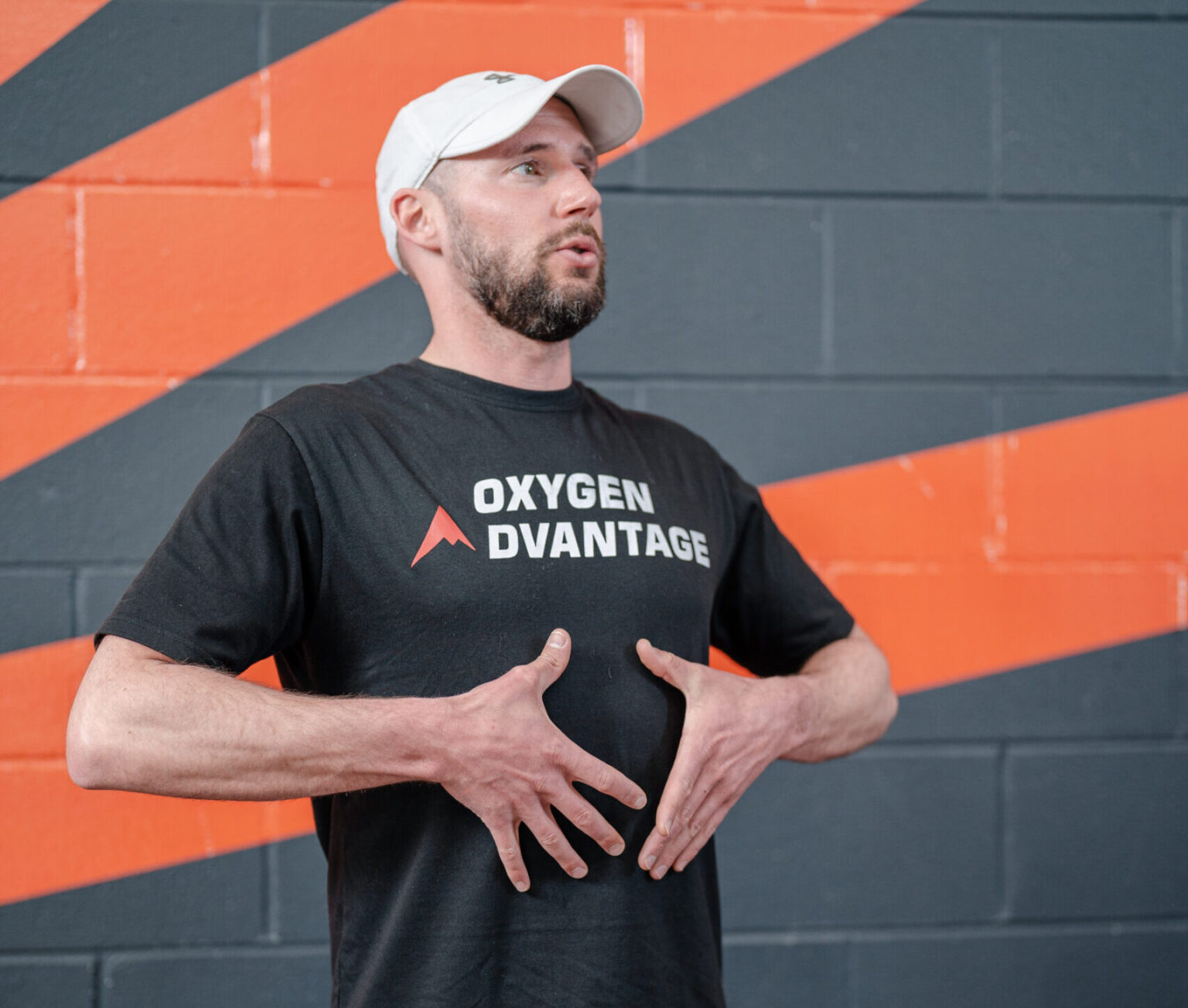
I’m Anthony Lorubbio, Founder and Head Coach at Recal Training. I’ve worked with hundreds of climbers, and time after time I see the same pattern: when the stakes rise and the air thins, breathing—not fitness—is what makes or breaks performance.
I like to think about preparing for an expedition the same way I think about packing my climbing pack. You’ve only got so much room, and every ounce counts. So you start filling it with the things you can control. Physical training, check. Nutrition planning, check. Gear selection, check. You’ve packed your logistics, your fitness, your layering system, all the things that make you feel ready. But most climbers overlook one of the most powerful (and lightest) tools of them all: their breath.
Breathwork is something you carry every step of the way, yet few people ever think to train it. It is also one of the most common reasons someone is forced to abort an expedition.
We spend months building leg strength, obsessing over acclimatization schedules, maybe even dialing in what we’re eating on the mountain with a nutritionist. But almost no one trains the very thing that determines how much oxygen actually gets used by your body, how well you breathe. So, before you zip up this hypothetical backpack and head to base camp, let’s make sure you’re not leaving one of the most important tools behind.
Below are the four most common breathing mistakes I see climbers make (the ones that can actually change your summit success) and the exact training and techniques I give my own clients before they fly or trek into base camp. These techniques are practical, evidence-based, and field-tested. And yes, I’ve tested them on myself, sometimes in the most epic and humbling of ways.
But before we even dive in, let’s start with a baseline test to find out how well YOU breathe. It’s called the Recal Breath Index, and it takes about 5 minutes to get a clear picture of how sharp your breathing mechanics are and how efficiently you utilize oxygen and carbon dioxide.
Knowing your Breath Index score will help you identify the weakest parts of your own breathing and get you on track to feeling less out of breath and stronger at the most challenging moments on the mountain.
Mistake #1: Over-breathing (hyperventilation) when the stakes and altitude are highest
Why is this a problem?
Over-breathing slows you down and taxes your respiratory muscles beyond their capacity. You likely won’t get efficient breaths (think: short, shallow, upper-chest breathing) and, paradoxically, taking in TOO MUCH air doesn’t work the way you think it does. It actually offloads too much carbon dioxide, which your body actually needs to release oxygen efficiently to your muscles. This means you’re working really hard for not much return on investment.
What to do about it?
You need to train for the feeling of breathlessness. Specifically, your breathing mechanics and CO₂ tolerance. Here’s a protocol for just that: Breathe Light.
How to Guide: Breathe Light
Watch the video first for guided practice, or use the steps below to do it on your own.
- In a comfortable seated position, breathe normally and place your pointer finger under your nose.
- Observe your breath as it enters and leaves your nose. Notice the movement in your lower belly and rib cage, as well as airflow on your finger. Try not to change the mechanics, just notice.
- Once you have an idea of how normal breathing feels, begin slowing your breathing. So much so that you can’t feel the air as it comes in and out through your nose. The goal is to reduce your breathing volume and feel a slight “hunger” for air.
- Continue this very slow breathing for 3 to 5 minutes.
- If you notice that your breathing rhythm is getting fast or chaotic, it means your need for air is too great. In this case, stop the exercise and breathe normally for 15 seconds or so, then resume gentle, light breathing to create a tolerable need for air.
Benefits of Breathe Light
- Reduced chemoreceptor sensitivity to carbon dioxide accumulation (i.e., higher CO2 tolerance and less “out of breath” feeling)
- Improved oxygen uptake and delivery (through something called the Bohr effect)
- Improved concentration and attention
- Proper diaphragmatic breathing mechanics
- Build resilience to your body’s natural stress response
NOTE: This exercise is not suitable for those with severe health conditions or those in the first trimester of pregnancy.
Summit Day Tip: If you feel panic breathing, don’t just breathe harder. Force a few full, low breaths and then use pressure-assisted exhales on the hardest moves.
Mistake #2: Too much mouth-breathing
Why is this a problem?
Mouth-breathing at altitude dries and irritates the respiratory tract, increases the risk of dehydration, and can trigger exercise-induced bronchoconstriction. We recognize that mouth-breathing is unavoidable at times (highly dependent on your CO2 tolerance). But habitual mouth breathing at altitude comes with three devastating consequences:
- No heating/humidification/filtration: Nasal sinuses warm and humidify incoming air; mouth breathing injects cold, dry air straight into the lower airways. On high-altitude climbs, that matters: dry, cold air increases airway irritation.
- Higher risk of exercise-induced bronchoconstriction: Classic pulmonary physiology shows that mouth breathing can worsen airway narrowing during exercise; nasal breathing tends to protect against that response. If your airways tighten at altitude, your breathing will spiral downward. And fast.
- Wasted mechanics: Mouth-breathing creates shallow, upper-chest patterns, which reduce efficiency. Nasal breathing engages diaphragmatic breathing (low and full breaths). 70% of the oxygen that diffuses into your blood happens in the lower 30% of your lungs. Get the air down there.
What to do about it?
Train your nasal breathing. Your nose is a muscle, and if you don’t use it, you lose it. This is especially true for those with a deviated septum or excessive mucus production.
To train your nose muscles, begin focusing on breathing as much as possible through your nose, especially on your inhale. During workouts, in between sentences while talking, and particularly at night. If you wake up with a dry mouth, you’re probably breathing with it at night. We recommend MyoTape to help you make the switch to nighttime nose breathing.
When you train for your climb at the gym or outdoors, you can use progressive re-education to activate your nose muscles. Start with nose-only breathing during lower-intensity movement, then layer in intensity while maintaining nasal flow until it’s no longer possible, and revert to Nose-Full-Low (more on that below) as a safety net.
If you have a history of bronchoconstriction or asthma, work with a clinician and consider nasal training and warming strategies as part of your preparation. You’ll stay drier, reduce your exercise-induced bronchoconstriction risk, and protect your airway function for the long haul.
Mistake #3: Weak diaphragmatic engagement (breathing high and shallow)
Why is this a problem?
Shallow, chest-dominant breathing leaves your strongest respiratory muscle, the diaphragm, barely engaged. Yet most people breathe that way. Learning to breathe low and fully expand your rib cage properly distributes the workload and keeps your oxygen delivery system stable and efficient, especially when the trail steepens and the air thins.\
What to do about it?
During your training, use the Nose-Full-Low technique. Using your nose, take full breaths (big, diaphragmatic inhalations), let the air fill your belly, and engage your diaphragm. You can also practice hook-lying diaphragmatic breathing (see details below) and use a diaphragm-training belt, such as the Buteyko Belt. This not only strengthens your diaphragm but also gives you tangible physical feedback on the location of movement with each breath. You will soon breathe subconsciously into your belly.
Another technique you can use during training is balloon breathing, which simply involves using your breath to inflate a balloon. This isn’t just about increasing lung-cage elasticity, though it does that; it’s specifically useful because it trains for pressure breathing on the mountain.
On the mountain, you’ll often hear guides mention the term pressure breathing. But what does that mean? Basically, it’s a full inhale, then a moderately forceful, slightly pursed-lip exhale that raises airway pressure and helps keep alveoli open and gas exchange more effective despite low ambient pressure. That positive pressure during expiration has been shown in both lab and field settings to increase arterial oxygen saturation and reduce acute mountain sickness symptoms after trekking to high altitude. Training with balloon breathing and positive end-expiratory pressure (PEEP) devices conditions you to use these mechanics without wasting energy.
Mistake #4: Neglecting respiratory muscle training (RMT/IMT)
Why is this a problem?
As you know, air pressure is lower at high altitudes than at sea level, and, since a gas moves from high-pressure areas to lower-pressure areas, this creates a problem getting sufficient air into your lungs. In other words, the air outside your lungs is at a lower pressure, so it will take more effort to pull it into your lungs. With this extra effort, with every breath, you’re getting closer to muscle failure for your primary inspiratory muscles (diaphragm and external intercostal muscles). If those muscles fatigue, your breathing becomes shallow and inefficient, which cascades into lower SpO₂, worse exercise economy, and earlier locomotor (leg) muscle fatigue (see: respiratory muscle-induced metaboreflex).
Targeted respiratory muscle training (RMT), like air-resisted diaphragmatic breathing, balloon breathing, and pressure breathing drills, strengthens the muscles that power your inhale and exhale. Research has shown that climbers and endurance athletes who perform inspiratory muscle training (IMT) maintain higher oxygen saturation at altitude than those who don’t.
Controlled studies of inspiratory muscle training (IMT) show it can attenuate the drop in arterial oxygen saturation at high altitudes. In one notable investigation, IMT increased inspiratory strength and blunted the fall in resting SpO₂ at ~4,880–5,550m compared with controls. In other words, trained respiratory muscles helped keep oxygen levels higher when it matters most.
What to do about it?
Make respiratory muscle training (RMT) a non-negotiable part of your pre-expedition training.
How to Guide: Hook-Lying Diaphragmatic Breathing
Watch the video first for guided practice, or use the steps below to do it on your own.
- From a hook lying position (lying flat on your back, feet flat on the floor, knees at a 90-degree angle), breathe deeply and engage your diaphragm. Feel your diaphragm flatten and expand 360 degrees around the base of your lower rib cage/belly.
- You should block one nostril to reduce air resistance. Even better, you could use a device to resist air, like the SportsMask, Airofit, or POWERBreathe. Or a device like the Isocapnic Breathe Way Better to build muscular endurance.
- Add the Buteyko Belt for physical resistance around your ribcage. Alternatively, stack a weight on your lower belly.
- Start with 3x sets of 10 deep breaths. Rest ~1 minute in between each set. Build air resistance, weight, speed, and reps as you advance your training.
Here’s a practical training outline:
- IMT (inspiratory muscle training): ~10 minutes total, 3-4 days/week, using an IMT device or structured coach-led protocol for 4–8 weeks. Build intensity progressively.
- Balloon Breathing (expiratory muscle training): Try 3 sets of 1 or 2 minutes each, focusing on a full inhale and a pressurized exhale to blow up the balloon. Blow it up as many times as you can.
- Training Integration: Add loaded hiking sessions where the breathing technique is deliberately practiced under progressive fatigue. Consider wearing a SportsMask or another air-resistance device on your hikes to simulate the lower air pressure at high altitude.
Combine respiratory muscle training (RMT) with the Nose-Full-Low technique and CO₂ tolerance work, and you’ll be stacking physiological adaptations: stronger respiratory muscles, better handling of high CO₂ in your blood, and improved alveolar mechanics when you use pressure breaths on the mountain.
Demystifying Breathwork Myths
Slow breathing is always better. Not necessarily. While it’s good below ~7,500 ft, it’s not good during your first hours at a new high altitude. You must be able to increase ventilation when the body demands it; that capacity to up-regulate ventilation without losing technique is our training priority.
Breathwork training is only for elite athletes. No. Respiratory muscle training (RMT) and nasal-breath training are low-risk/low-cost, high-value pieces of proper preparation for any climber aiming for multi-day, high-altitude objectives.
I can skip acclimatization now that I’ve done breathwork training. Absolutely not. Breathwork training increases your capacity to maintain higher blood oxygen saturation and performance. However, it is not a substitute for slow, sensible acclimatization, good hydration, and listening to your CTSS guides and doctors. If you experience breathlessness that’s out of character, a cough with frothy sputum, crackling sounds inside your lungs, or a high fever, treat it seriously. Seek medical attention and descend immediately. HAPE and other serious altitude illnesses are uncommon but real, and they’re not something breathwork training or willpower can overcome.
Watch our FREE Breathwork Webinar with Anthony
Improve your altitude endurance with breathwork training. Join Anthony Lorubbio of Recal to learn evidence-based breathwork techniques that improve oxygen efficiency and resilience at altitude. There are three sides to breathwork training: mechanical efficiency for optimal oxygenation, high-altitude simulation exercises, and respiratory muscle training. This webinar will show you how to integrate breathwork exercises that target those three areas into your training, even on a tight schedule. The data speaks for itself; get ready to transform your performance on Everest and other iconic peaks!
Your Next Steps: Work with Anthony
Find out which of these four mistakes you might be making. Don’t just guess if your breathing is mistake-free. Find out using the Recal Breath Index discussed at the beginning of this blog.
It will break down your breathing into two parts:
- The Biochemistry of your Breathing: How efficiently you exchange oxygen and carbon dioxide, regulate blood pH, and deliver oxygen to your muscle tissue. Plus, you will finally get a real, trackable metric for the out-of-breath feeling.
- The Biomechanics of your Breathing: The efficiency of airflow, your lung expansion, and the proper engagement of your diaphragm
Taking the Recal Breath Index is the first step toward identifying both the weakest and strongest parts of your breathing. And most importantly, it will give you insight into what needs extra attention.
If you’re ready to reinforce this work with a focused training plan, reach out to Anthony at anthony@recaltraining.com. A few targeted exercises now can make a real difference on the mountain.